
# books / Why Marx Was Right - Terry Eagleton
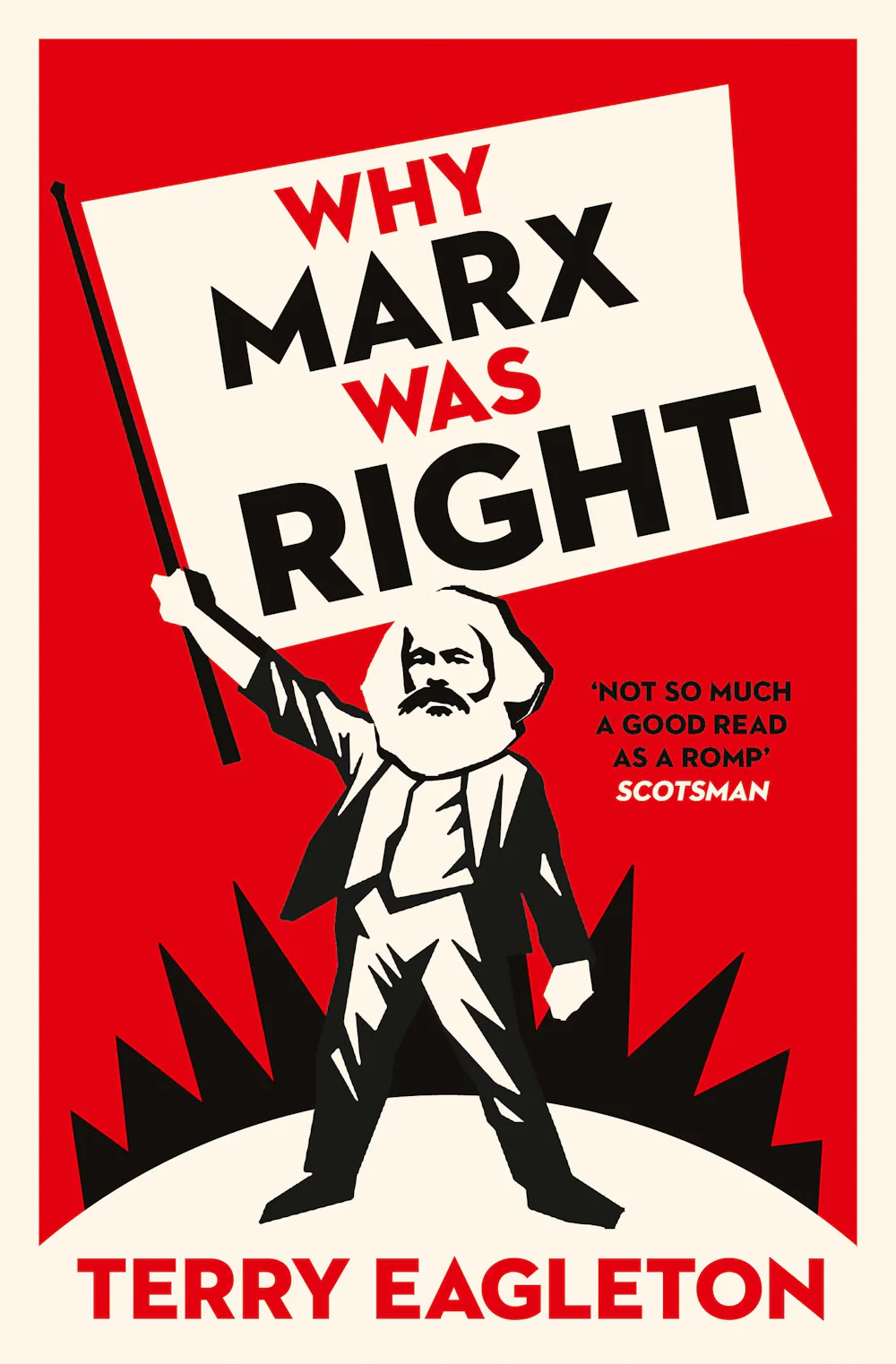
This book front-loaded its more accessible content, while the back half descends into an academic discussion of lenses of history that had less appeal to the reasons I read this book. The world order is collapsing, and I’m trying to revisit lasting perspectives of that order, to understand better what might be happening, and what could take its place.
Notes
Trump is a rejection of politics itself. Marx highlighted the gap between political and real life. Politicians today are booed, hated, and reviled. This is new. This was not the case for Churchill or Kennedy.
Populism today has far-right and far-left expression. Far-right populism is a product of capitalism. The market does not care about our identity. We all must go to where the money is and do as the money wants. Today’s far-right movements are a reaction against that.
People are talking about capitalism again, which suggests that it is no longer accepted as the natural state of things that Capitalists like to pretend.
Marx remains relevant to a modern post-industrial world
Marxism is a critique of, and aims to succeed, capitalism. He foresaw globalisation and white collar work. His analysis remains relevant and astute today.
Marxism in practice is authoritarian & causes mass poverty
Colonialism & workhouses supported early capitalism. Force & violence.
Today people still live in stark poverty, choosing between food and heat, while others make more money than has ever been seen.
The author makes a version of the “not done right” arguments, including blaming bad conditions, the need for wealth first, international cooperation etc. I see this as a flaw in the plan. If it can’t be done except under perfect conditions, it probably can’t be done.
Socialism has the ironic truth that the places where revolution is most likely are the least likely to have the conditions to succeed, eg poor places. If socialism is not self sustaining, it’s a dream.
Capitalism does indeed have its own significant flaws, but it has also found ways to improve, if only for profit. The excuse that heinous conditions were a factor outside the control of any philosophy can’t be acceptable.
We shouldn’t toy with ideas which need such careful handling, or else destruct.
The trouble with socialism is that it takes up too many evenings — Oscar Wilde
Class is still relevant
Wealth is more concentrated than ever. A handful of corporations make decisions about the world and accountable only to shareholders.
Marx did not define working classes as manual workers but anyone forced to sell their labour to capitalists to survive, including non-exec white collar workers today.
He preferred revolution & violence to sensible improvement
Most of us got here through revolution, we just don’t see it that way because that’s a mark of its success.
Revolutions can be bloody or bloodless, and that’s often most determined by the reaction of the incumbents, even when a majority support their overthrow.